Collectibles & Memorabilia
How to Spot a Fake Autograph
Learn the key warning signs of forged autographs and how collectors authenticate signed memorabilia before buying.
By Signatrue.ai Published on
Autographs can hold emotional, historical, and financial value. Whether you collect signed sports memorabilia, celebrity photos, movie posters, or music albums, knowing how to identify a fake autograph is essential. The market for forged signatures is massive, and many counterfeit items appear convincing at first glance.
Fake autographs are especially common for famous athletes, musicians, and actors because demand is consistently high. The more desirable the celebrity, the more likely fake signatures exist in the market.
The first step in spotting a fake autograph is comparing the signature to verified authentic examples. Authentic signatures usually show smooth movement, natural flow, and consistent pen pressure. Forged signatures often look slow, shaky, or overly careful because the forger is attempting to copy every detail precisely.
Collectors should also pay attention to signatures that look “too perfect.” Real autographs typically contain slight imperfections due to natural signing speed.
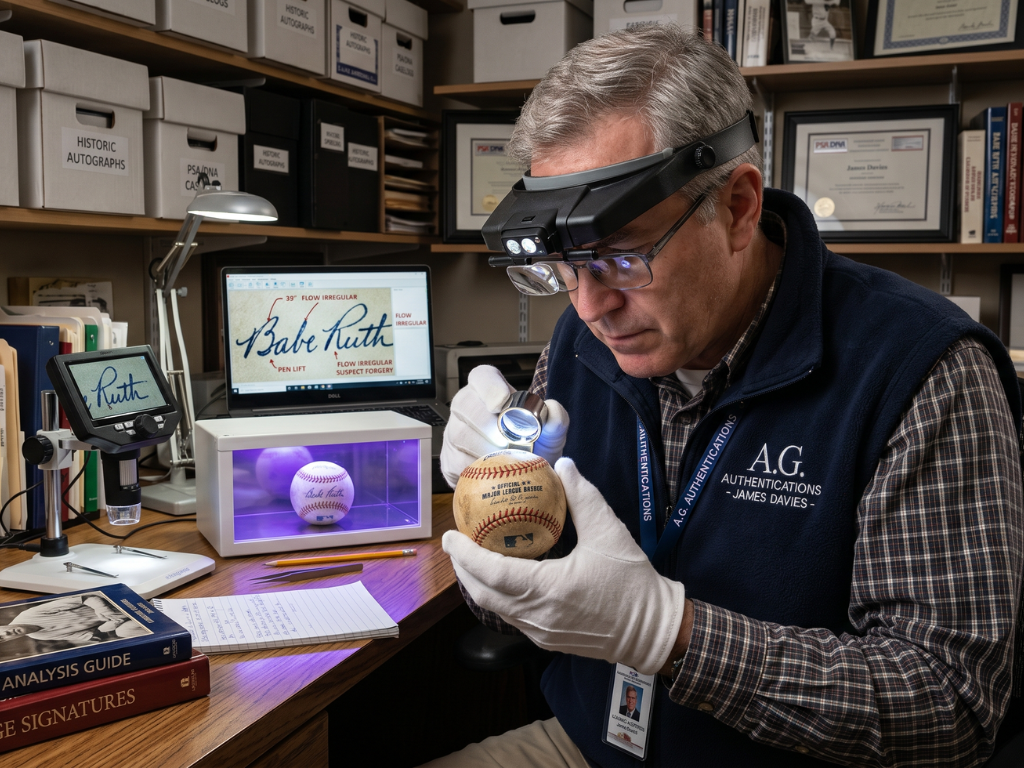
Collector inspecting a signed memorabilia item to verify autograph authenticity.
Another important factor is provenance — the documented history behind the autograph. Reliable provenance may include photographs from the signing event, receipts from reputable dealers, or professional authentication documents from trusted companies.
However, collectors should remember that not every Certificate of Authenticity (COA) is trustworthy. Many fake autographs are sold with counterfeit certificates. Researching the authentication company is just as important as examining the signature itself.
Ink quality and surface consistency also matter. Printed reproductions may appear flat under magnification, while genuine ink often shows texture and natural marker flow. If multiple items have signatures placed in exactly the same position with identical strokes, they may be machine-produced or printed copies.
Before making a purchase, collectors should always verify the seller’s reputation, reviews, and return policies. If a deal seems unusually cheap for a rare autograph, that is often a major warning sign.
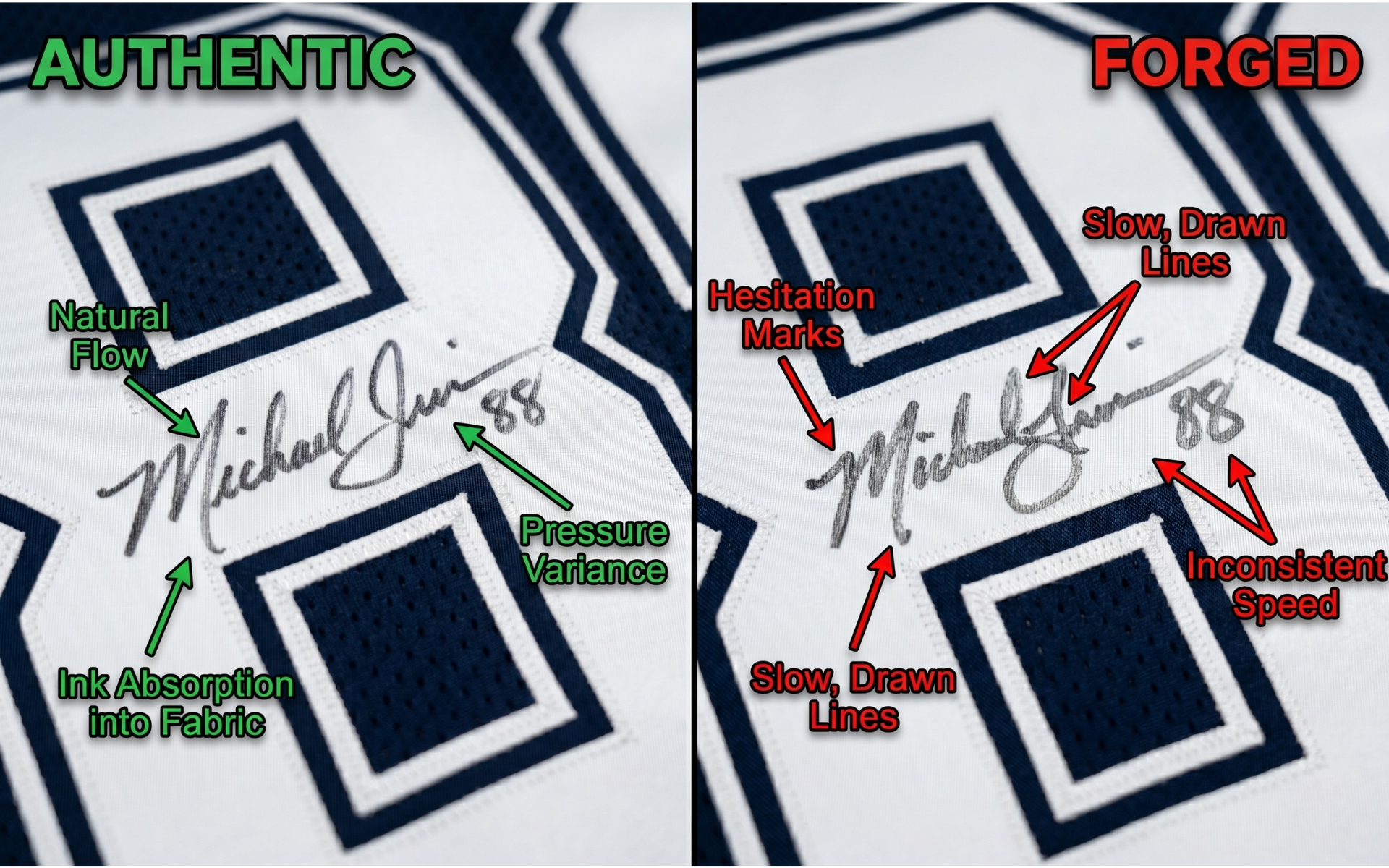
Comparison between authentic and forged autograph characteristics.
Collectors can further protect themselves by learning the signing habits of celebrities and athletes. Some public figures rarely sign memorabilia publicly, which makes large quantities of their autographs suspicious.
For expensive memorabilia, professional authentication is often worth the investment. Experts analyze writing speed, ink patterns, signature evolution over time, and known authentic examples to determine legitimacy.
The safest strategy for collectors is simple:
- Buy from reputable dealers
- Compare signatures carefully
- Verify provenance
- Use trusted authentication services
Learning how to spot fake autographs takes patience and research, but developing these skills can help collectors avoid costly mistakes and build collections with confidence.